Ductless Heat Pump Solutions for Colorado Springs Homes
A ductless heat pump delivers both heating and cooling from a single system — without ductwork. Using inverter-driven compressor technology, these systems adjust output continuously to match your home’s exact comfort needs across Colorado Springs’ demanding climate.

How Ductless Heat Pumps Provide Heating and Cooling
A heat pump doesn’t generate heat — it moves it. This fundamental operating principle makes heat pumps significantly more efficient than traditional resistance heating systems.
Heating Mode
In heating mode, the outdoor unit extracts heat energy from outside air — even in cold conditions — and transfers it indoors through the refrigerant cycle. The indoor air handler distributes this warmth throughout the room. Because the system moves existing heat rather than creating it, a heat pump can deliver several units of heat energy for every unit of electricity consumed.
Cooling Mode
In cooling mode, the process reverses. The indoor unit absorbs heat from inside air and the refrigerant carries it to the outdoor unit, where it’s released. This is the same principle as a conventional air conditioner. The result is cooled, dehumidified air distributed through the indoor air handler — without ductwork losses.
Inverter Technology
Inverter-driven compressors adjust speed continuously rather than cycling on and off at full power. This means the system ramps up when demand is high and throttles back when the room approaches the set temperature — delivering more consistent comfort, quieter operation, and significantly lower energy consumption compared to fixed-speed systems.
Where Ductless Heat Pumps Work Well
Ductless heat pumps are a practical fit for a wide range of residential situations in Colorado Springs. Here are the most common applications.
Homes Without Existing Ductwork
Many older Colorado Springs homes — particularly in neighborhoods like Old Colorado City, Ivywild, and the Westside — were built before central HVAC. A ductless heat pump provides whole-home heating and cooling without the cost and disruption of retrofitting ducts through finished walls and ceilings.
Room Additions and Conversions
Finished basements, converted garages, sunrooms, and above-garage bonus rooms are frequently disconnected from the main HVAC system. A single-zone heat pump provides independent climate control for these spaces without modifying existing ductwork or overloading your current system.
Finished Basements
Below-grade spaces stay naturally cooler in summer but can become uncomfortably cold in winter. A ductless heat pump handles both conditions — providing cooling when the basement traps heat from the floor above, and supplemental heating when temperatures outside drop.
Individual Comfort Zones
Multi-zone ductless systems let each room or area maintain its own temperature independently. This is particularly useful in multi-level homes where natural heat rise creates significant floor-to-floor temperature variation — a common situation in Colorado Springs properties.
Types of Ductless Heat Pump Systems
The right configuration depends on how many zones you need and how each indoor unit fits into the room.
Single-Zone Systems
- One indoor unit + one outdoor unit
- Ideal for one room or defined area
- Independent thermostat control
- Garages, offices, studios, bedrooms
Multi-Zone Systems
- 2–5 indoor units per outdoor condenser
- Each zone controlled independently
- Whole-home or multi-room coverage
- Flexible configuration for complex layouts
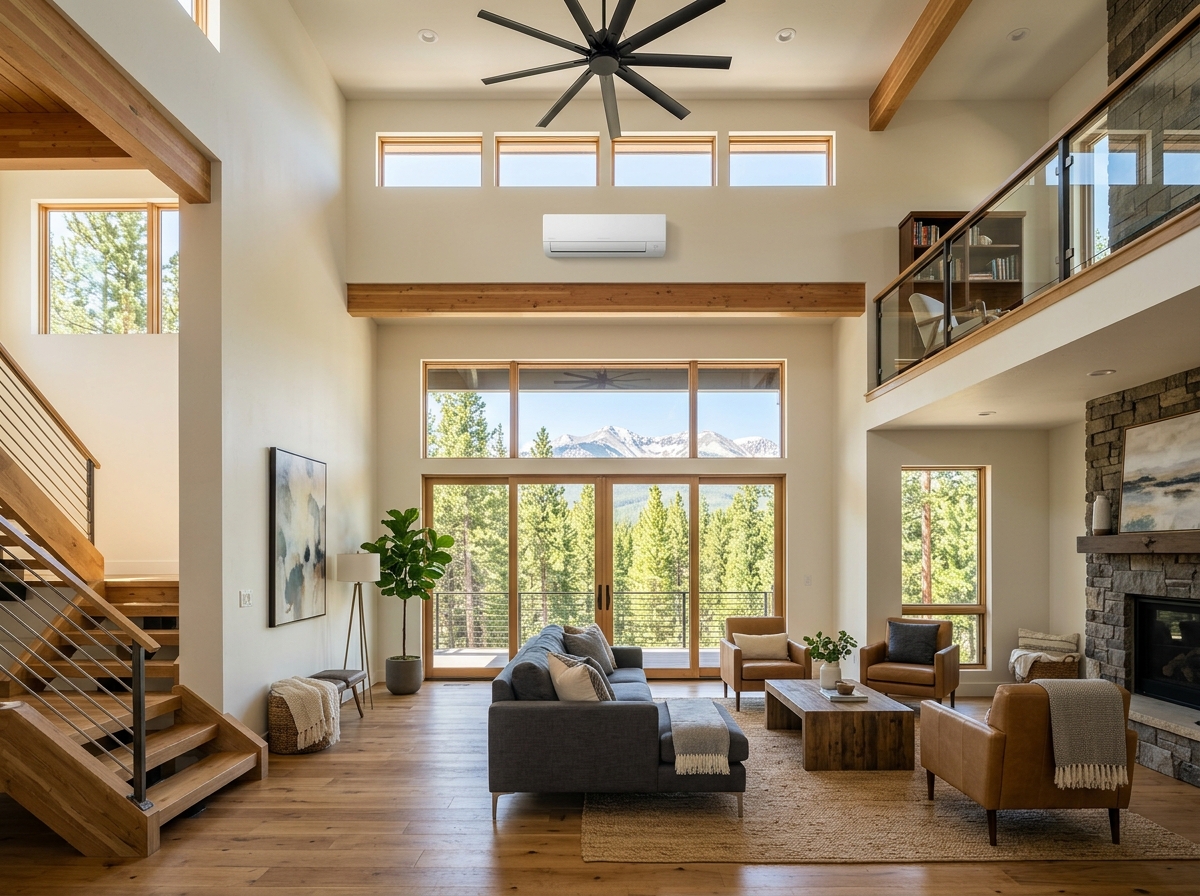
Wall-Mounted Air Handlers
- Most common indoor unit style
- Mounted high on the wall
- Efficient airflow distribution
- Easy maintenance and filter access
Ceiling Cassette Units
- Recessed into the ceiling for flush look
- Four-way air distribution
- Ideal for open floor plans
- Requires ceiling cavity access
Floor-Mounted Units
- Positioned near the floor
- Good for rooms with large windows
- Effective floor-level heat delivery
- Works in low-ceiling spaces
Choosing and Sizing a Ductless Heat Pump
Proper system sizing is the most critical factor in heat pump performance. A system that’s too small will struggle to maintain temperature. A system that’s too large will short-cycle, reducing efficiency and comfort.
Ductless Heat Pump FAQ
Yes. A ductless heat pump operates as an air conditioner in summer — absorbing heat from indoor air and transferring it outside. In winter, the process reverses — the system extracts heat from outdoor air and transfers it indoors. One system provides year-round climate control without separate heating and cooling equipment.
Traditional HVAC systems run at full power and cycle on and off to maintain temperature. Inverter-driven heat pumps adjust compressor speed continuously to match the exact heating or cooling demand. This results in more consistent temperatures, quieter operation, and reduced energy consumption compared to fixed-speed systems.
All ductless mini split systems with heating capability are technically heat pumps. The terms are often used interchangeably. The key distinction is whether the system is rated for cold climate operation — standard heat pumps lose capacity as temperatures drop, while cold climate models maintain performance at much lower outdoor temperatures.
Most residential systems support between one and five indoor zones connected to a single outdoor unit. Each zone gets its own indoor air handler and independent thermostat. The number of zones depends on the outdoor unit’s total BTU capacity and the heating/cooling load of each individual zone.
Yes, but system sizing must account for the reduced air density above 6,000 feet. Heat transfer efficiency changes at altitude, and systems sized using sea-level calculations may underperform. Proper load calculations adjusted for Colorado Springs’ elevation ensure the system delivers adequate capacity in both heating and cooling modes.
Explore Zoned Ductless Heating and Cooling for Your Home
Whether you’re considering a heat pump for a single room, a whole-home solution without ductwork, or want to understand which configuration fits your property — contact us for a consultation. We’ll evaluate your space, explain your options, and help you choose the right system.