Professional Ductless Mini Split Repair Services in Colorado Springs, CO
When your ductless system stops cooling, won’t heat, leaks water, or displays an error code — you need a technician who can diagnose the actual problem and fix it correctly. We troubleshoot and repair all major mini split brands across Colorado Springs and El Paso County.
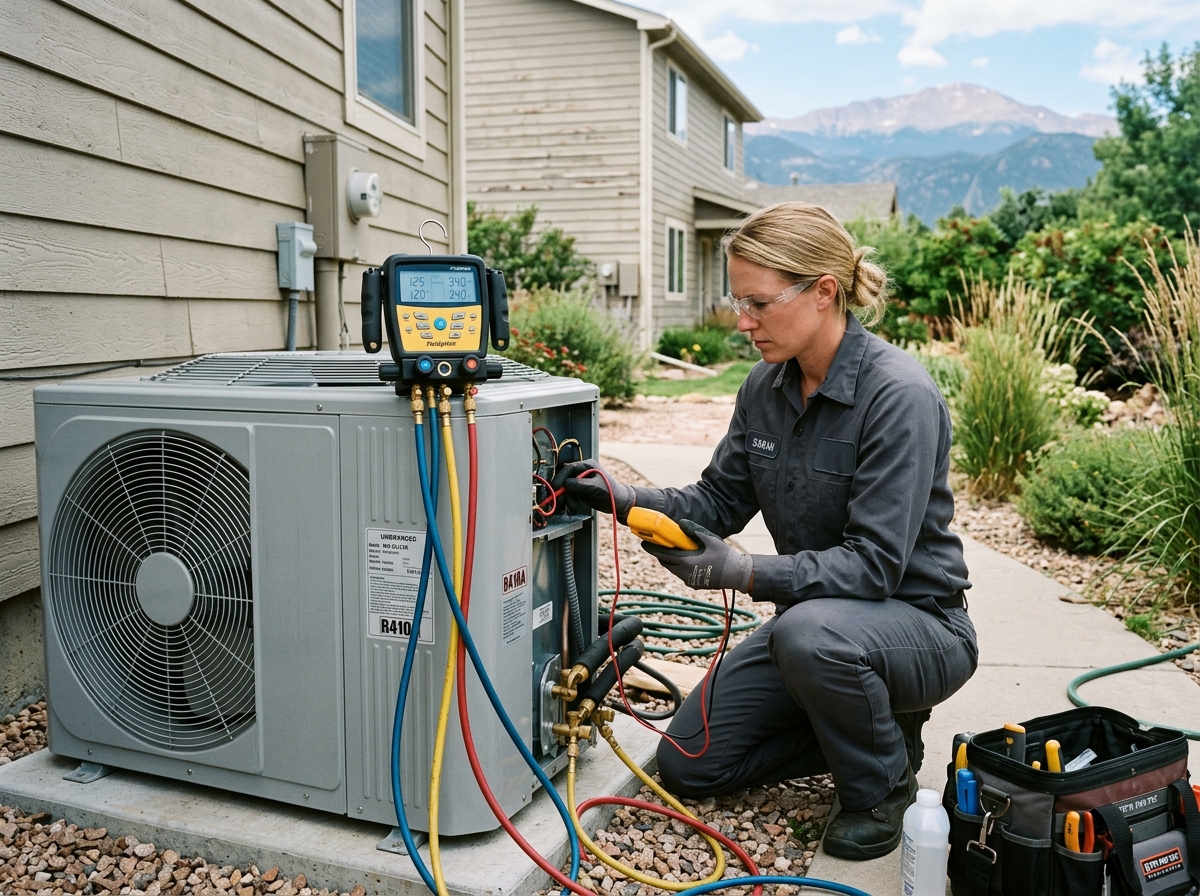
Signs Your Ductless System May Need Repair
Some symptoms are obvious — the system simply won’t turn on. Others develop gradually and are easy to overlook until performance drops noticeably or a component fails completely.
System runs but produces no cold or warm air
The unit powers on, the fan spins, but the air coming out is room temperature. This often points to a refrigerant issue, compressor problem, or control board fault.
System cycles on and off frequently (short cycling)
When the system turns on for a few minutes, shuts down, and restarts repeatedly, it could indicate an overheating compressor, a sensor fault, or restricted airflow through a clogged filter or dirty coil.
Indoor unit doesn’t respond to the remote control
If replacing the remote batteries doesn’t help, the issue may be a faulty infrared receiver on the unit, a control board malfunction, or a communication error between indoor and outdoor components.
Ice forming on the indoor evaporator coil
A frozen coil usually indicates restricted airflow from a dirty filter or blower, low refrigerant from a slow leak, or a fan motor running below normal speed. Continuing to operate with ice buildup risks compressor damage.
Simple Checks to Try Before Scheduling Service
Some apparent problems have simple causes that homeowners can verify before scheduling a service call. Try these first — they may save you time and a trip charge.
Check the remote batteries
Replace batteries and try again. Weak batteries are the most common reason a remote stops working.
Inspect the air filters
Pull out the filters on the indoor unit and check for heavy dust buildup. Clogged filters restrict airflow and can trigger shutdowns.
Verify the breaker hasn’t tripped
Check your electrical panel. If the dedicated breaker for the mini split has tripped, reset it once. If it trips again, call a technician.
Check for ice around the outdoor unit
In winter, a layer of frost is normal during defrost cycles. Thick ice covering the entire unit indicates a problem that needs professional attention.
Clear debris from the outdoor unit
Remove leaves, grass clippings, or snow blocking airflow around the outdoor condenser. Restricted airflow reduces performance and can cause overheating.
Confirm the system mode is set correctly
Make sure the unit is set to the right mode — cooling in summer, heating in winter. An incorrect mode setting is more common than most homeowners expect.
Common Ductless Mini Split Problems We Diagnose
These are the most frequent repair issues we encounter across Colorado Springs. Each one requires a different diagnostic approach and repair strategy.
Mini Split Not Cooling
The system runs but delivers warm or room-temperature air during cooling mode.
- Dirty evaporator coil restricting heat absorption
- Low refrigerant charge from a slow leak
- Compressor not engaging or running at reduced capacity
- Blocked condensate drain triggering safety shutdown
Mini Split Not Heating
The unit operates in heating mode but doesn’t produce warm air — particularly noticeable during Colorado Springs winters.
- Reversing valve not switching to heat mode
- Outdoor unit frozen over beyond normal defrost capacity
- Compressor performance declining in low ambient temperatures
- Control board or thermostat sensor malfunction
Indoor Unit Leaking Water
Water dripping from the indoor wall unit onto the wall or floor below.
- Clogged condensate drain line
- Cracked or misaligned drain pan
- Ice melting from a frozen evaporator coil
- Improper unit tilt causing water to pool incorrectly
Weak or Reduced Airflow
Air comes out but at a noticeably lower volume than normal, reducing the system’s ability to condition the room.
- Heavily clogged filters
- Blower wheel packed with dust and debris
- Fan motor running below normal speed
- Blocked or partially closed louvers
Error Codes on Display
The indoor unit or remote displays a blinking light pattern or alphanumeric error code.
- Sensor faults (temperature, pressure)
- Communication errors between indoor and outdoor units
- Refrigerant pressure anomalies
- Electrical or control board failures
Unusual Noises
Clicking, buzzing, rattling, grinding, or squealing sounds that weren’t present during normal operation.
- Loose or unbalanced fan blade
- Failing motor bearing
- Debris caught in the blower wheel
- Refrigerant flow noise from valve or line-set issue
How Ductless System Diagnosis Works
We don’t guess. Every repair starts with a structured diagnostic process that identifies the root cause before any work begins.
Review the System Symptoms
We start by understanding what you’re experiencing — when the problem started, what the system does (or doesn’t do), any error codes displayed, and whether the issue is consistent or intermittent. This guides the diagnostic sequence.
Diagnose Indoor and Outdoor Components
We inspect both the indoor air handler and outdoor condenser. This includes checking electrical connections, testing sensor readings, measuring refrigerant pressures where applicable, verifying fan and motor operation, and inspecting the condensate drainage path.
Complete the Appropriate Repair
Once the root cause is identified, we explain the problem, present the repair options, and complete the work after your approval. If a part needs to be ordered, we provide a timeline and schedule the return visit.
Test System Operation and Performance
After the repair is complete, we run the system through its operating modes — cooling, heating, and fan. We verify temperature output, airflow volume, and proper cycling before leaving. If the original symptom returns within our service window, we come back at no additional charge.
Repair Options Based on the Problem
Not every repair is the same scope. Here’s what to expect depending on the issue your system is experiencing.
Component-Level Fixes
The most frequent repairs involve individual components that can be replaced or serviced during a single visit. These include clogged condensate drain lines, dirty filters causing shutdowns, faulty temperature sensors, and worn-out fan motors. Most are resolved same-day.
Electrical and Refrigerant Issues
Control board replacements, refrigerant leak detection and recharge, and wiring or connection faults fall into this category. These repairs may require ordering manufacturer-specific parts and scheduling a follow-up visit for completion.
Compressor and System-Level Failures
When a compressor fails, a reversing valve sticks, or the system has sustained significant electrical damage, the repair cost may approach or exceed the value of the unit. In these cases, we present a clear comparison between repair cost and replacement cost so you can make the right decision for your situation.
Ductless Mini Split Repair FAQ
Several conditions can cause a mini split to run without producing cold air — a dirty evaporator coil restricting heat absorption, low refrigerant charge from a slow leak, a failing compressor, or a blocked condensate drain triggering a safety shutdown. A diagnostic visit identifies which component is responsible and what repair is needed.
Error codes are built-in diagnostic indicators that point to specific component failures or operating conditions — such as a sensor fault, communication error between indoor and outdoor units, or a refrigerant pressure anomaly. We cross-reference the code with manufacturer documentation and verify the condition with direct testing before recommending a repair.
It depends on the failure, the system’s age, and the cost of the repair relative to replacement. A failed control board or fan motor on a system that’s otherwise in good condition is usually worth repairing. A compressor failure on a system that’s 12–15 years old with multiple prior issues may justify replacement. We present both options with clear cost estimates so you can make an informed decision.
Indoor unit water leaks are most commonly caused by a clogged condensate drain line, a cracked or misaligned drain pan, or ice forming on the evaporator coil and then melting. In Colorado Springs, dust accumulation in the drain pan and line is a frequent contributor due to the dry, dusty climate. We inspect the entire drainage path, clear any blockage, and verify proper condensate flow.
Not all noises indicate a failure, but persistent clicking, buzzing, rattling, or grinding sounds usually point to a developing issue — a loose fan blade, a failing motor bearing, debris in the blower wheel, or a refrigerant flow problem. Addressing unusual sounds early often prevents more costly damage to compressors and motors.
Mini Split Not Heating or Cooling Properly? Schedule a System Evaluation
If your ductless system is showing symptoms — weak airflow, water leaks, error codes, unusual noises, or inconsistent temperatures — contact us to schedule a diagnostic visit. We’ll identify the problem, explain your options, and provide a clear estimate before any repair work begins.