Professional Mini Split Cleaning in Colorado Springs, CO
Dust, debris, and biological buildup accumulate inside your mini split’s indoor unit over time — reducing airflow, lowering efficiency, and potentially affecting indoor air quality. Our deep cleaning service removes what regular filter washing can’t reach.
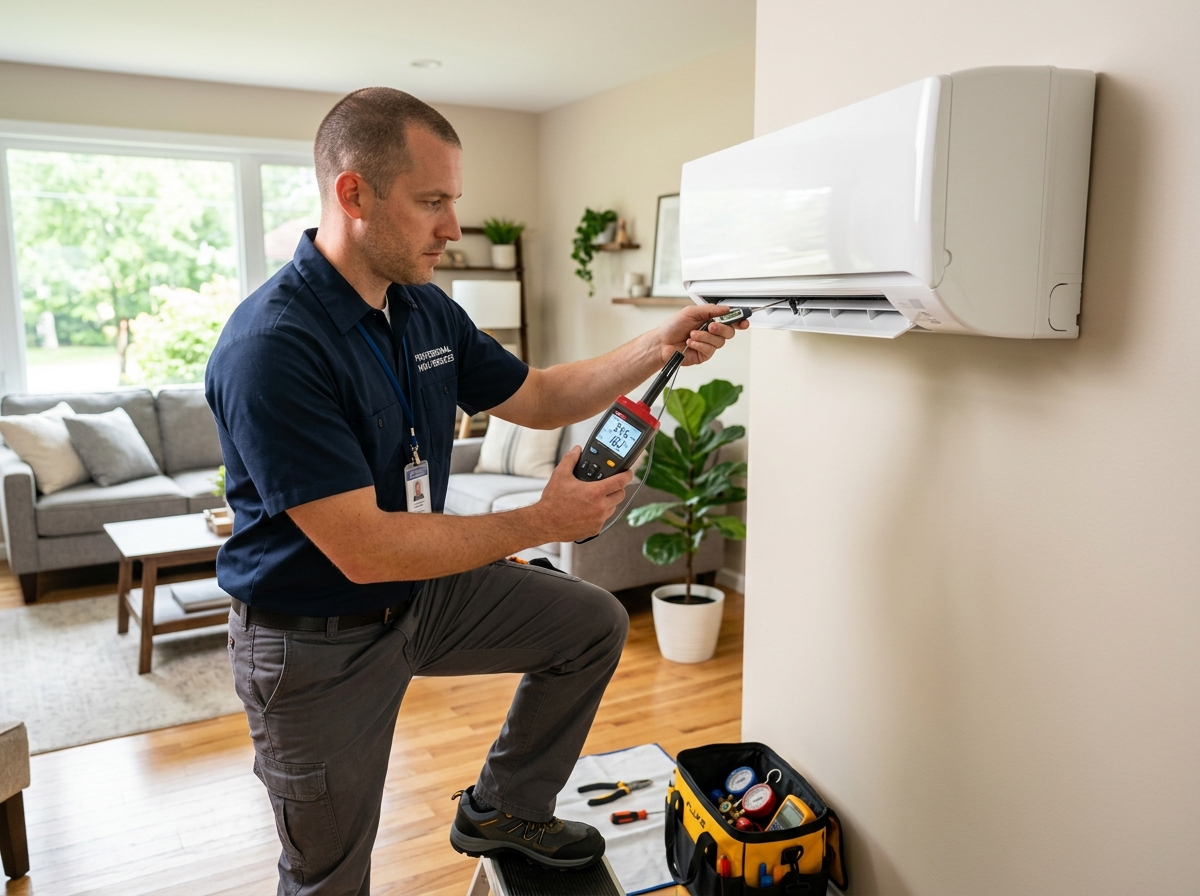
Signs Your Mini Split May Need Professional Cleaning
These indicators suggest internal buildup has progressed beyond what basic filter cleaning can address.
Noticeably weaker airflow
Even with clean filters, airflow feels reduced compared to when the system was new. This often means the blower wheel fins are packed with dust.
Musty or stale odor when the unit starts
Organic debris and moisture trapped inside the unit create an environment for odor development — especially common in Colorado Springs’ dry, dusty conditions.
Visible dirt on the coil or inside the unit
If you can see dust or dark buildup on the evaporator coil when you open the filter panel, professional cleaning is overdue.
System runs longer to reach set temperature
When internal components are coated with debris, heat transfer drops and the system compensates by running longer cycles — increasing energy consumption.
Water dripping from the indoor unit
A clogged condensate drain — often caused by dust and debris buildup in the drain pan — prevents water from draining properly and leads to leaks.
It’s been over a year since last cleaning
For year-round systems in Colorado Springs, annual professional cleaning is a practical benchmark. Homes with pets or heavy dust exposure may benefit from more frequent service.
What Homeowners Can Inspect Safely
You don’t need to take the unit apart to spot the early signs of internal buildup. Here are the things you can check yourself between professional cleanings.

Why Internal Ductless Units Accumulate Dust and Debris
Colorado Springs’ climate creates conditions that accelerate internal buildup inside ductless units compared to more humid or lower-elevation environments.
Dry, Dusty Air at Elevation
The dry air above 6,000 feet carries more fine particulate matter than humid climates. This dust passes through filters over time and settles on the evaporator coil, blower wheel, and drain pan interior. Year-round operation means continuous exposure.
Condensation Meets Dust
During cooling mode, the evaporator coil produces condensation. Airborne dust sticks to this moisture and forms a layer that hardens over time. This coating insulates the coil, reducing its ability to absorb heat and lowering system efficiency.
Blower Wheel Geometry Traps Debris
The blower wheel has dozens of closely spaced fins designed to move large volumes of air. Those same fins trap dust, pet hair, and fine debris between them. As buildup increases, airflow drops and the fan motor draws more power to compensate.
Drain Pan and Line Accumulation
Condensate water flows through a drain pan and exits through a narrow drain line. Dust settling in the pan mixes with standing water and can form a sludge-like blockage. A partially blocked drain leads to slow drainage — a fully blocked one causes water to overflow inside the unit.
Components Included in Professional Mini Split Cleaning
Every cleaning service covers all internal surfaces where dust and debris accumulate. Here’s what we clean during each visit.
Air Filters
Filters are removed, washed, and dried. Heavily deteriorated filters that no longer catch particulates effectively are identified so you can replace them.
Evaporator Coil
The coil is cleaned using appropriate cleaning solutions and techniques that remove the dust-and-moisture layer without bending coil fins or damaging the surface. This restores heat absorption efficiency.
Blower Wheel
The blower wheel is accessed and cleaned fin-by-fin to remove packed dust and debris. This is the component most responsible for reduced airflow — and the hardest for homeowners to clean safely without disassembly.
Drain Pan
The drain pan is cleaned of sludge, debris, and any biological growth. Proper drainage starts with a clean pan — any cracks or misalignment are noted during the process.
Condensate Drain Line
The drain line is flushed and cleared to ensure condensate water exits the unit properly. In Colorado Springs, dust-laden drain lines are one of the most common causes of indoor unit water leaks.
Outdoor Coil (When Applicable)
If the outdoor condenser coil shows visible dirt, cottonwood seed accumulation, or debris restriction, we clean it to restore proper airflow and heat rejection capacity.
How Professional Mini Split Cleaning Works
Each cleaning follows a structured process designed to protect your walls, floors, and furnishings while thoroughly cleaning every internal component.
Protection and Preparation
We lay protective coverings beneath the indoor unit to catch water and debris. The unit housing is partially disassembled to access internal components without damaging the wall or unit casing.
Component Cleaning
Filters, evaporator coil, blower wheel, and drain pan are cleaned individually using appropriate solutions and tools. Each component is treated based on the type and severity of buildup present.
Drain Line Flush and Verification
The condensate drain line is flushed with water to confirm unrestricted flow. If blockage is detected, the line is cleared and retested until drainage is confirmed.
Reassembly and Airflow Verification
All components are reinstalled, the unit housing is reassembled, and the system is run to verify restored airflow, proper drainage, and normal operation in both cooling and heating modes.
Mini Split Cleaning FAQ
For most Colorado Springs homes running their system year-round, professional cleaning once per year is recommended. Homes with pets, smokers, or heavy dust exposure may benefit from cleaning every 8–10 months. The dry, dusty climate at our elevation tends to accelerate internal buildup compared to more humid regions.
The blower wheel is responsible for moving conditioned air into the room. As dust and debris accumulate between its fins, airflow decreases, the motor works harder, and the system’s ability to heat or cool the space diminishes. A heavily clogged blower wheel can also create a musty odor as trapped moisture and organic material break down inside the unit.
The air filters are designed for homeowner cleaning — most slide out easily. However, the evaporator coil sits behind the filters and requires partial disassembly of the indoor unit housing to access properly. Improper cleaning can bend coil fins, damage the drain pan, or push debris deeper into the unit. Professional cleaning ensures thorough, safe removal of buildup without damaging components.
A musty or stale odor when the system starts usually indicates biological growth or organic debris trapped inside the indoor unit — typically on the evaporator coil, blower wheel, or inside the drain pan. In Colorado Springs, dust mixes with condensation and creates an environment where this buildup can develop. A deep cleaning of the internal components usually resolves the odor.
No. Cleaning focuses specifically on the physical removal of dust, debris, and buildup from internal components — coils, blower wheel, drain pan, filters, and condensate lines. Maintenance is broader and includes inspection, performance testing, electrical checks, airflow measurement, and system evaluation. Both are important, but they serve different purposes.
Is Your Indoor Unit Due for a Deeper Professional Cleaning?
If your airflow has dropped, you notice a musty smell when the system starts, or it’s been more than a year since a professional cleaning — contact us to schedule a visit. We’ll clean every internal component thoroughly and restore your system’s airflow and efficiency.